Has Capitalism Rewired Our Brains
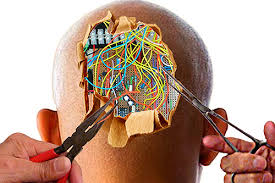 Capitalism, as an economic system characterised by private ownership and the free market, has profoundly transformed not only society but the very fabric of human interaction. It has undeniably spurred innovation and economic growth in areas such as transport, medicine, production, and, of course, computing. The repercussions on human behaviour, social structures, and mental well-being are increasingly evident. Could it be rewiring our brains?
Societies
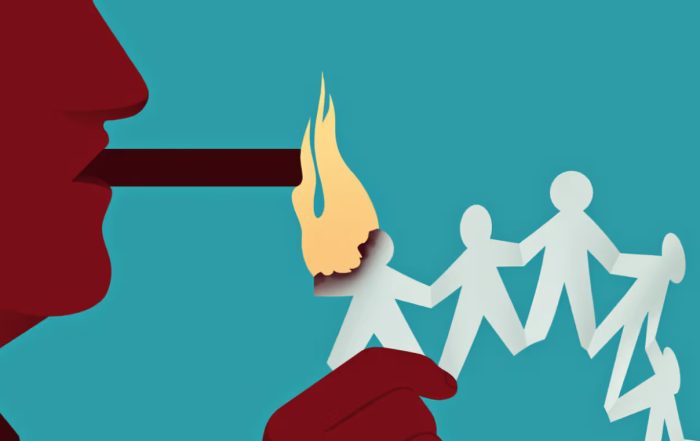
Historically, human beings have thrived in communal settings, relying on mutual support and collaboration. However, capitalism has fostered individualism at the expense of community cohesion. The relentless pursuit of profit and personal gain has shifted societal values, leading people to prioritise self-interest over collective well-being. This shift is evident in how relationships have transformed, with individuals often viewing one another as competitors rather than collaborators.
In an increasingly competitive market, the idea of “survival of the fittest” extends beyond biology to social interactions. As people become more focused on their own success, they may neglect the importance of supporting one another, creating a culture where empathy is often overshadowed by ambition.
This has led to the gradual breakdown of mutual support within communities. In pre-industrial societies, survival often depended on cooperation. Extended families, neighbours, and local groups formed tight networks of reciprocal obligation. People relied on each other not just emotionally but materially – sharing tools, labour, and knowledge. Capitalism, particularly in its modern, globalised form, has replaced many of these bonds with transactional relationships. Services once exchanged through goodwill are now monetised. Care work, childcare, eldercare, and even companionship have increasingly become commodified.
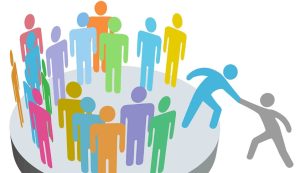 This shift alters not only behaviour but expectations. When interactions are framed through a market lens, people begin to evaluate relationships in terms of cost and benefit. The question subtly changes from “How can we help one another?” to “What do I get out of this?” Over time, this erodes trust and reduces the incentive to invest in long-term social bonds. Everything becomes a transaction.
Respect, too, becomes tied to economic status rather than character or contribution to the community. Wealth becomes a proxy for worth, and those with less are often marginalised or overlooked.
Production
The focus since the days of Henry Ford has been on production efficiency. The ability to produce the maximum number of goods for the lowest price. The labour of people is one of the biggest inputs and the highest costs. When you stop seeing labour as people and start treating them as production units, you rewire their view of their employer. What was once called human resources becomes live assets.
 This environment changes how individuals perceive their own value. Instead of seeing work as a contribution to society or a source of personal fulfilment, many come to view themselves as interchangeable units of labour. The emphasis shifts to productivity metrics, performance indicators, and constant self-optimisation. People are encouraged to treat themselves as “human capital,” investing in skills and experiences primarily to increase their market value.
The psychological toll of this can be significant. Job insecurity, long hours, and the pressure to constantly prove one’s worth can lead to stress, burnout, and a diminished sense of autonomy. The idea of a stable career or a long-term relationship with an employer has largely disappeared in many industries. Instead, workers are expected to be flexible, adaptable, and always available. Security is so twentieth-century.
Slavery
Slavery once meant that labour was owned. A slave had no rights and was kept alive only to undertake work assigned by a slave master. Enslaved people largely had to accept their lot and saw no way out. Within their limited sphere, they tried to build the best life possible.
One of the most interesting things about slavery was that when it ended, many were unable to live a free life. In a world where everything was decided for you, how do you transition to a world where you have to make decisions yourself? Over generations, the brains of slaves had been rewired to unlearn self-sufficiency.
Capitalism’s emphasis on price competitiveness has far-reaching consequences for labour markets and wages. In a system where profit maximisation is paramount, companies often seek to minimise costs, leading to wage stagnation and a race to the bottom in terms of employee compensation. This creates a precarious job market in which many workers find themselves in low-paying, unstable positions with limited opportunities for advancement.
The psychological impact of this labour dynamic is profound. Many individuals develop a “slave-like” attitude towards their jobs, feeling trapped in a system that devalues their contributions. The constant pressure to perform and compete can lead to burnout and a sense of disillusionment. This attitude is often exacerbated by corporate cultures that prioritise productivity over employee well-being, fostering environments where workers feel expendable.
“After careful consideration of Oracle’s current business needs, we have made the decision to eliminate your role as part of a broader organisational change,” the dawn communication read, according to website Business Insider.
“As a result, today is your last working day.”
Where once there might have been mutual respect and responsibility between employer and employee, there is now a transactional relationship in which workplace agreements define the boundaries, where personal friendships are the exception rather than the norm. Our brains have been conditioned to think of a job as a demanding chunk of our lives that generates money and offers no security.
 This feeds into what can be described as a “slave-like” attitude toward work – not in the literal historical sense of slavery, but in the sense of diminished freedom and agency. Many individuals feel trapped in jobs they cannot leave because of financial obligations, lack of alternatives, or fear of instability. The rhetoric of freedom and choice often masks a reality where choices are constrained by economic necessity.
We use the term “pioneers” for people who packed up their families and moved to another land with no idea as to how they would survive. Many have lost that pioneering spirit, and their brains are now wired to accept their lot and make the best of it.
Consumption
The goal of capitalism is to sell as many items as possible to as many people as possible. Selling an item that can be refurbished, repaired or reused is counterproductive. Better to have it break and then sell a new one.
This has led to the transformation from durable, repairable goods to disposable, single-use items. Historically, products were built to last, and repair was a common skill. People knew how to fix clothing, tools, and household items, not only because it was economical but because it was necessary. Knowledge was passed down through generations, reinforcing a sense of competence and self-reliance.
My father taught me how to replace the heels and soles on shoes. In the garage, he had a last, leather, glue and nails. By the time I hit double figures, I could repair my own shoes. The last time I did that was probably half a century ago.
 Modern capitalism often prioritises planned obsolescence and cost minimisation. Products are designed to be replaced rather than repaired. Components are sealed, proprietary, or simply too cheap to justify the labour required for fixing them. This has led to a decline in practical skills and a corresponding increase in dependence on external systems. When something breaks, the default response is to replace it rather than repair it.
This shift has psychological consequences. The act of repairing something teaches patience, problem-solving, and a tangible connection to the material world. Losing these skills can contribute to a sense of helplessness and detachment. People become consumers rather than makers or maintainers. The environment also suffers, as waste accumulates and resources are consumed at unsustainable rates, but the deeper issue is the loss of agency. When individuals no longer understand how things work, they are less empowered to challenge or change the systems they depend on.
The same logic applies to knowledge itself. As specialisation increases, fewer people understand the systems that underpin their daily lives—from food production to energy systems to digital infrastructure. While specialisation can increase efficiency, it also fragments knowledge and reduces collective resilience. In a crisis, communities may struggle to adapt because the skills needed to solve problems are not widely distributed. We have stopped being fixers because we have been rewired not to fix things.
Advertising
To sell goods, we took advertising to a whole new level. From a painted sign on a shop door, we have moved to billions of messages daily, scrambling our brains. They hit us through social media, TV, newspapers, billboards, and both sporting and social events. We have become conditioned to filter out thousands of messages until one hits the mark. That Bali trip we have been thinking about, or a special offer on a pair of slippers.
How is it that we can take in thousands of messages a day and only one or two stick? Another example of brain rewiring to develop the ability to find the needle in the haystack.
FOMO
The phenomenon of FOMO has become a defining characteristic of contemporary life. The rise of social media has given us constant exposure to curated lifestyles and achievements, leading to a pervasive sense of inadequacy. “I don’t have that, so I want it.” Capitalism fuels this fear by promoting a culture of comparison, where success is often measured by material wealth and social status.
As individuals strive to keep up with their peers, they may engage in compulsive consumption to alleviate feelings of missing out. This constant chase for the latest trends or experiences not only drains financial resources but also contributes to mental health issues such as anxiety and depression. The capitalist framework encourages people to seek validation through consumption, reinforcing the notion that happiness is tied to material possessions. “He who dies with the most toys wins.”
Did our ancestors think in such a way? Were they content with their possessions, or did they crave replacing them with something new? If you had grandparents born in the early years of the 1900s, you probably heard them talk about the chair, the plate, or the bed they bought when they were first married and still used. FOMO is an invention of capitalism to keep the money flowing.
One of my favourite quotes was from a friend who once said, “In the 1600s, people had around 30 personal items, including clothes, tools, and utensils. I have that many in one kitchen drawer.”
Conclusion
In conclusion, capitalism has profoundly influenced the way humans think and behave, shaping everything from social relationships to personal identity. It has contributed to the erosion of communal support, the rise of anxiety-driven consumption, the loss of practical skills, and increasing pressures in the labour market.
While capitalism has also brought undeniable benefits in terms of innovation and material abundance, its psychological and social costs are becoming increasingly apparent.
Somewhere along the way, we began to change the way we think about living in a collective society; the satisfaction of building and maintaining our own possessions; having a job that provides stimulation and security; and the ability to improve our lives without doing so at the expense of others. We can’t un-rewire our brains. We can, however, understand that capitalism has changed the way we think.