Nuremberg
I saw the movie Nuremberg recently. Aside from being one of the best movies I have seen in recent years, it had a couple of scenes that got me thinking. Maybe it was how the script was written, or perhaps it was how things were in the late 1940s, but the comments open a Pandora’s Box of biases and tribalistic attitudes.
I am not going to reveal the story for those who have not seen it yet, so no spoiler alert is required.
The first point that stuck with me is that the central character, a psychiatrist, went to Germany to understand how Germans could be so ruthless toward other nationalities. What was it about the German people that made them so different?
The second point occurs during a radio panel in America, where the panellists cannot believe what happened in Germany could ever happen there. The psychiatrist replies, “One half of Americans would climb over the other half to get to the top.”
Is the world such a dog-eat-dog place? Can we learn anything from the past, particularly WW2?
Germany Post World War I
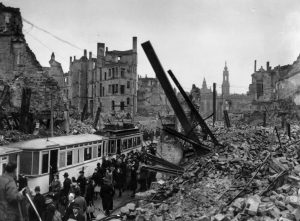 The Allies castrated Germany after WW1. Their industries were destroyed, their debt repayments devastated the country, and food was scarce. The conditions imposed by the Allies were meant to create a Germany that would never rise again. Germany was pushed back to a medieval society while the rest of the Western world continued to prosper. It was a fatal path for all involved and showed the short-term thinking that dominated the victors.
If you were able to take a barometer of the German people in the early 1930s, you would have found no love for the victors of World War I. Desperation to find a way out of poverty and starvation. A society upended after half a decade of growth from the mid-nineteenth century up to 1914. In other words, people were receptive to the promise of a way out of their current situation under the Weimar Republic.
Setting the Scene
Enter Adolf Hitler. He had clear voids to fill. First, pride in what had once been a proud nation. He preached the superiority of the Aryan race. Second, someone to hold responsible for their current situation. He chose the elite. The Jews who controlled many of the businesses, the Weimar Government, which did nothing, and the Communists, who preached another form of government. Thirdly, he stoked anger. No negotiation for Hitler. He wanted the people out there to vent their anger. Breaking things and storming the government offices. Burning books and smashing shop windows on Kristallnacht, or the Night of the Broken Glass.
Getting Elected
When the crowd was fired up, he ran for President in 1932 but was defeated by Paul von Hindenburg. The Nazis, however, were the strongest party but short of an outright majority. Traditionally, the leader of the largest party was the Chancellor, so in 1933, von Hindenburg appointed Hitler Chancellor.
Abolish the Existing Structure
Next, he focused on abolishing institutions. During 1933 and 1934, he carried out the following.
- Reichstag Fire Decree (February 28, 1933): Using the Reichstag fire as a pretext for a “Communist plot, Hitler persuaded President Hindenburg to issue an emergency decree that suspended fundamental civil liberties, including freedom of speech, assembly, and the press. This decree allowed for the detention of political opponents without charge and gave the central government authority over regional governments.
- Establishment of Concentration Camps (March 1933): The SS established the Dachau concentration camp to incarcerate political opponents, a move made possible by the suspension of legal protections. They expanded to take all who disagreed with the Führer.
- The Enabling Act (March 23, 1933): This law effectively transferred legislative power from the Reichstag to Hitler’s cabinet, allowing him to pass laws without parliamentary approval or the President’s signature. The act was passed under immense pressure, with many opponents already arrested or intimidated.
- Purge of the Civil Service (April 1933): The Law for the Restoration of the Professional Civil Service removed Jewish people and political opponents from government positions, including judges, teachers, and university professors.
- Abolition of Trade Unions (May 1933): All independent trade unions were abolished and their leaders arrested. Workers were forced into the Nazi-controlled German Labour Front (Deutsche Arbeitsfront).
- Creation of a Single-Party State (July 1933): All other political parties were banned or forced to dissolve, making the Nazi Party the only legal political entity in Germany. The Reichstag became a mere “rubber stamp” for Hitler’s dictatorship.
- Night of the Long Knives (June 30, 1934): Hitler purged the leadership of the SA (Stormtroopers), a paramilitary wing that had become a potential rival, to consolidate his power and gain the support of the regular army.
- Merging of the Chancellor and President Roles (August 1934): Following President Hindenburg’s death, Hitler merged the offices of Chancellor and President, declaring himself “Führer and Reich Chancellor” and commander-in-chief of the armed forces. A manipulated referendum confirmed this.
- Oaths of Loyalty: All state officials and members of the armed forces were required to swear an oath of personal loyalty directly to Hitler as the Führer, rather than to the Constitution or the state itself.
Stack the Leadership
During this period, he filled all senior roles with his followers. Hitler intentionally replaced professionals with loyalists, blurred the lines between party and state roles, fostered rivalry among subordinates to prevent challenges, and centralised ultimate decision-making in himself. These included.
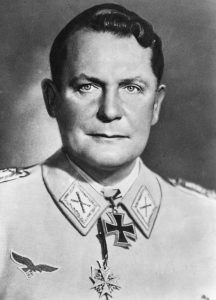 Hermann Göring
- Owner of the Four Year Plan (1936) – controlled rearmament and the economy
- Commander-in-Chief of the Luftwaffe
- Minister-President of Prussia
- One of the most powerful men in Germany until the war turned against him.
Joseph Goebbels
- Minister for Public Enlightenment and Propaganda
- Controlled press, radio, film, culture, and public messaging.
- Central to mass mobilisation and antisemitic propaganda.
Rudolf Hess
- Deputy Führer (until 1941)
- Handled party administration and ideological oversight.
- Less influential than others but symbolically important.
Police, Security & Repression
Heinrich Himmler
- Reichsführer-SS
- Controlled the SS, Gestapo, concentration camps, and later much of internal security.
- Became one of the most powerful figures in Nazi Germany.
Reinhard Heydrich
- Head of the RSHA (Reich Main Security Office)
- Ran the Gestapo, SD, and criminal police.
- Key architect of terror, surveillance, and later genocide.
Military Leadership (Late 1930s Shift)
After the Blomberg–Fritsch Affair (1938), Hitler removed independent-minded generals and tightened control.
Wilhelm Keitel
- Chief of the OKW (Armed Forces High Command)
- Loyal to Hitler, rarely challenged orders.
Walther von Brauchitsch
- Commander-in-Chief of the Army (until 1941)
- More traditional officer but politically weak.
Foreign Policy & Diplomacy
Joachim von Ribbentrop
- Foreign Minister (from 1938)
- Negotiated major agreements, including:
- Munich Agreement (1938)
- Molotov–Ribbentrop Pact (1939)
Law, Administration & Racial Policy
Wilhelm Frick
- Minister of the Interior
- Drafted laws that dismantled democracy and enforced racial policy.
Hans Frank
- Nazi legal authority; later Governor-General of occupied Poland
- Helped shape the legal framework of Nazi rule.
Economic & Armaments Management
Hjalmar Schacht (declining influence by the late 1930s)
- Initially, the Minister of Economics
- Helped early rearmament but fell out with Hitler.
Fritz Todt
- Head of significant infrastructure and later armaments projects
- Organised autobahns and military construction.
Centralise Decision Making
In 1934, Hitler took on the roles of both Chancellor and President, combining them into the office of Führer. He made the army swear an oath to him, not to the country. The Enabling Act of 1933 meant Hitler and his cabinet could make laws without the Reichstag. Laws could override the Constitution, and Parliament was irrelevant.
By 1938, Hitler had abolished Cabinet meetings and major decisions required his personal approval.
Hitler centralised decision-making by destroying legal constraints, eliminating rivals, fragmenting institutions, and forcing all authority to flow through him personally, while keeping the system intentionally chaotic so no one else could dominate it.
He saw a white, preferably blue-eyed, blond person as superior to all others. His tribe was the ultimate human being, and anyone else was inferior and destined only to serve the aryan race.
Methodology
Hitler used the following methodology:
- Set the scene by sewing dissent, anger, and blame against the ruling class. Foster violence and disruption against minorities.
- Use the existing electoral system to get elected.
- Destroy the electoral system and any other part of the system that you see as a constraint on your power.
- Stack the most powerful positions with sycophants and play potential rivals against one another.
- Centralise all decisions and eliminate any delegated authority
USA Today
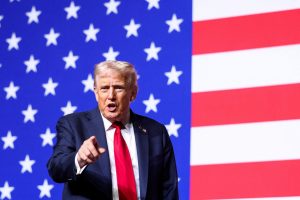
Returning to the movie Nuremberg, in the US radio panel discussion, all but one of the participants were convinced that it could never happen in America. The “American Tribe” was not like the “German Tribe”. Somehow, they were more civilised. Do we still think that today? The Hitler playbook is exactly the playbook Trump is using.
First, he stirred discontent. In his most recent election, he used the lie of a stolen election. He has tried to either destroy or stack the Courts, the Reserve Bank, the FBI, the Defence (sorry War), and just about every other significant role with his own followers. He has challenged constitutional power structures and wants the states to gerrymander electorates. He wants to centralise all the major decisions.
Just as Hitler moved into Poland and then began to overrun Europe, Trump wants to take Greenland, or perhaps he has lost interest in Greenland now, and the next is Venezuela. Which country will follow? He has already talked about Panama, so that may be moving towards the top of the list.
Conclusion
There is one glimmer of hope. If enough people remember the Hitler playbook, maybe there will be enough resistance to stop him. I doubt he has any intention of only serving two terms. He has made comments in that direction. Will Congress stop him? If he loses seats in the midterms, will he cry foul and disregard the results? Time will tell.
It is movies like Nuremberg that prod our conscience. They bring history to life and remind us it could happen again. Everyone should watch the film and reflect on its relevance to today.